
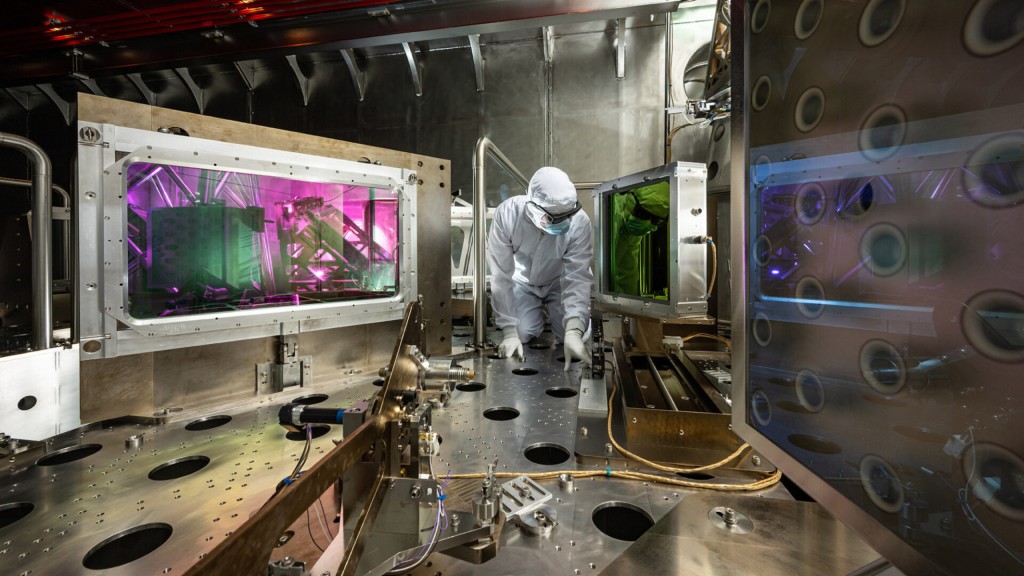
Region’s laser leadership shines during STELLAR site visit
NextCorps and Luminate recently hosted representatives from the National Science Foundation (NSF) as part of a site visit for STELLAR—the University of Rochester-led initiative that is one of 15 finalists nationwide in the NSF Regional Innovation Engines competition, and the only project from New York State still under consideration. If selected, the Rochester-Finger Lakes region could receive up to $160 million over the next decade to accelerate research, workforce training, and business growth tied to optics, photonics, imaging, and laser technology.
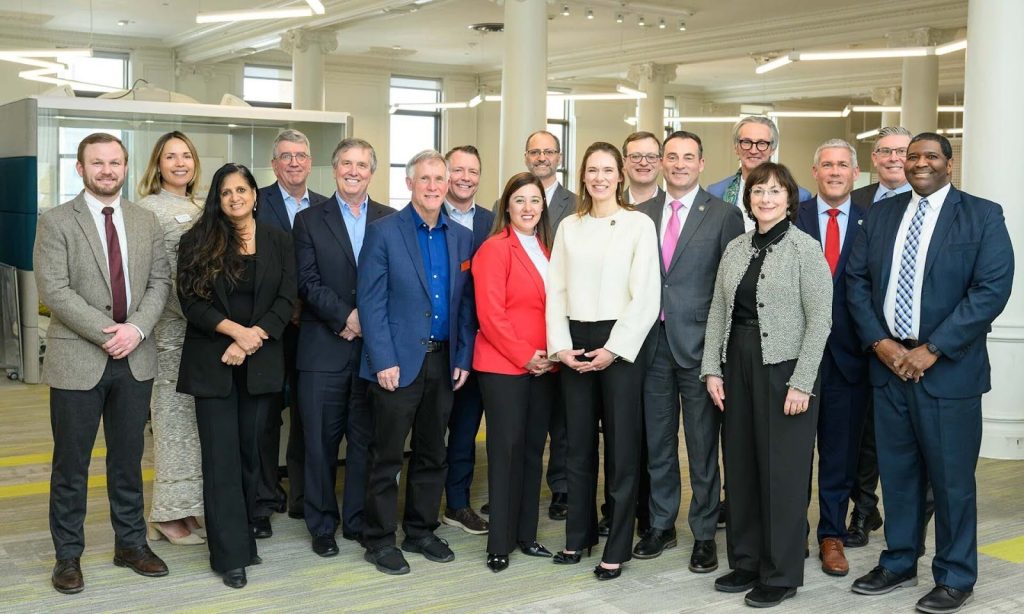
During the visit, NSF officials met with more than 75 community leaders to see firsthand how universities, companies, and economic development organizations are working together to make Rochester a national hub for laser innovation.
“The U.S. only makes about a third of the lasers used in this country, and that number is shrinking,” shared Dr. Ramanujan, Luminate Managing Director and CIO. “We are headed to a serious national problem if we don’t close that gap and start making our own lasers… Rochester already has the infrastructure in place to support the laser industry. STELLAR could propel us into the next generation of science-based business.”
NSF is expected to announce its Engines awards later this year.
The reformer & the engineer: A lesser-known Rochester connection
Every March, Rochester honors Susan B. Anthony. But behind the famous reformer stood a protege who transformed the world of industry: Kate Gleason.
While Anthony coached her on the “business of being a pioneer,” Gleason was busy shattering glass ceilings in science. Her resume is a series of historic milestones:
- The academic: The first woman in Cornell University’s engineering program.
- The globalist: A manufacturing trailblazer who personally expanded Gleason Works into European markets.
- The innovator: An entrepreneur who launched eight companies and pioneered fireproof, affordable concrete housing.
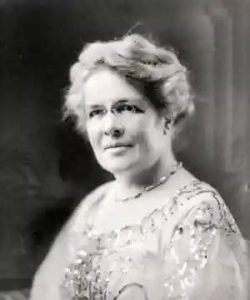 Gleason’s life was bookended by her connection to Anthony—she even hosted the activist’s final birthday party. Today, her impact is immortalized at the Kate Gleason College of Engineering (RIT), proving that while Anthony fought for the vote, Gleason built the world women would step into.
 Moving from prototype to production? NextCorps’ free, nine-week virtual Manufacturing Accelerator connects startups with industry experts, trusted manufacturing partners, and funding opportunities. Requires ~4 hours/week. Starts April 15. Apply by April 10.
 The New York Business Plan Competition brings together top student-led startups from across the state to compete for $100K in prizes. Join investors and ecosystem leaders on Wednesday, April 22 to see the pitches and awards, walk the expo, and network. Get tickets.
Grow-NY is accepting applications for round 8. The competition awards $3M annually to seven early-stage food and ag startups tackling global challenges through sustainable innovations. Winners receive funding, mentorship, and customized Upstate NY business development trips. Apply by May 15.
 GENIUS NY is looking for cohort 10. The startup accelerator invests $3M annually into early-stage companies focused on uncrewed aerial systems, automation, and advanced air mobility. Winners also receive business training, office space, and support with recruiting, marketing, and fundraising. Apply by May 17.